Jurassic Park & Frankenstein: A Thematic Comparison of Human Ambition
Written By: Josh Kozak
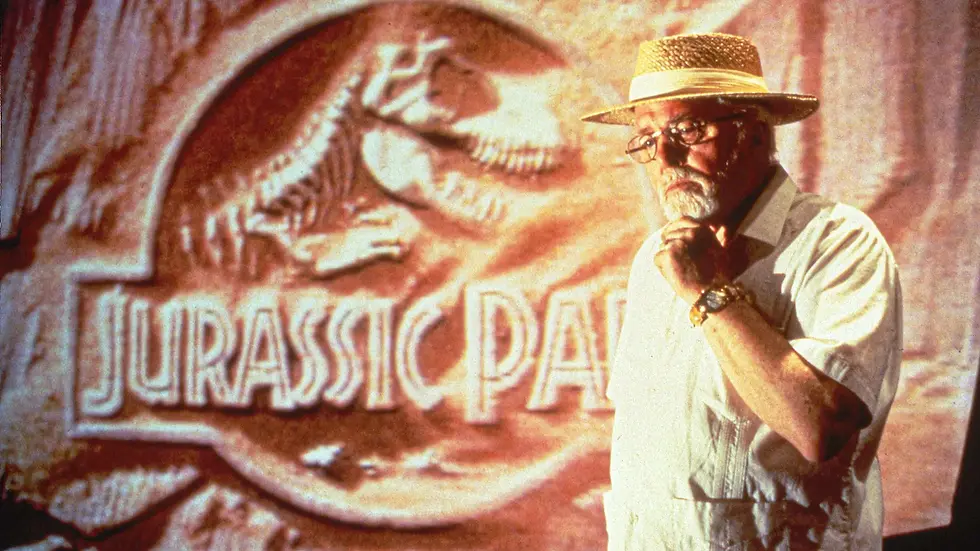
From the start, Jurassic Park and Frankenstein share several similarities that showcase the inevitable collapse driven by unchecked human ambition and the consequences of creating something against nature. For example, Frankenstein begins with a flashforward scene of Robert Walton and, eventually, his shipmates saving Victor Frankenstein, who then begins talking, foreshadowing the reckless acts of Victor and how they ultimately led to his being stranded in the cold ocean and alone. This parallels the Jurassic Park opening scene, where a flash-forward shows people at the dinosaur park trying to care for the dinosaurs, foreshadowing the eventual consequences of ambition-driven behavior. The similarities within the two opening scenes for each independent piece of work represent how, from the beginning, both showcase the consequences of creating something against nature, primarily driven by uncontrollable passion from an individual (group of individuals). Another similarity between the two pieces of work is the “creators' original fascination with either the idea or the actual creation of their creatures. In Frankenstein, we see Victor have an extreme fascination with science and the creation of life, going as far as learning how to create life from scraps of dead people. This is very similar to Jurassic Park, where John Hammond, the creator of Jurassic Park, was extremely fascinated with dinosaurs and exceptionally joyful when the dinosaurs were eventually brought to life. Additionally, one of the closest similarities between Frankenstein and Jurassic Park is the illustration of scientific creativity and how pushing the boundaries of science, without considering any of the ethical or moral consequences, leads to extreme regret and eventual demise and/or malicious attacks on society. In Frankenstein, we see Victor’s naive creation of his monster, the instant regret that comes with it, and the eventual murders of Victor’s loved ones, representing how pushing the boundaries of science, and not thinking of the repercussions, end up causing serious issues within society. Similarly, the scientist who pushed the boundaries, eventually bringing dinosaurs back to life, regretted it once the dinosaurs started to quote-unquote “revolt” or “fight back,” and kill/hurt the individuals in the park, once again illustrating the consequences of pushing scientific creativity beyond natural limitations. Lastly, beyond simple plot points, the two pieces of work also share the concept that created things can not be controlled. In both Frankenstein and Jurassic Park, we see that the people who created the creatures eventually lose control of their creations. This concept represents the dominance nature has over human ambition/intervention. No matter how hard either Hammond or Victor Frankenstein tried, they were and will never be able to control their creations, because in life you can not control anything besides yourself, a very evident theme in both the novel (Fraknestein) and the film (Jurassic Park).

While there were several similarities between Frankenstein and Jurassic Park, demonstrating and building off the concepts revolving around human intervention, scientific creation, and controlling the uncontrollable, the film and novel still had many differences. Beyond the obvious differences between the two pieces of work, such as the fact that one is about monsters and the other is about dinosaurs, or that Frankenstein is focused on an individual’s creation (Victor), whereas Jurassic Park is focused on a group of scientists' creation, there were also lots of structural and narrative differences. For example, the stylistic approach of Frankenstein uses layered, framed narration through the back and forth between Walton, Victor, the Creature, back to Victor, and then Walton again, which is different from Jurassic Park, which uses more of a straightforward, linear narrative. These differences allow for each piece of work to bring something new and unique, with Frankenstein being more storyline-driven and Jurassic Park emphasizing immediate danger. Another difference between Frankenstein and Jurassic Park is the difference in intent between Victor and the scientists / Hammond of Jurassic Park. In Frankenstein, Victor created the creature based solely on the intent of his burning passion and curiosity about the living and creation of life, whereas in Jurassic Park, Hammond and the other scientists created the creatures (dinosaurs) for a (mainly) monetary purpose, evident by the circular table scene with the lawyer and Hammond discussing potential “day passes” and other money-making strategies. Lastly, and personally, what I think is the biggest difference is the symbolism behind the creation of the creature(s) in the two pieces. In Frankenstein, the creation of the creature symbolizes isolation and emotional detachment, whereas in Jurassic Park, the creation of the dinosaurs (creatures) symbolizes capitalism (Hammond). While these differences are definitely noticeable, especially if you analyze the two pieces, and allow for a unique reading/watching process, I personally would say they are minor compared to the similarities. The similar theme in both Frankenstein and Jurassic Park revolves around the idea of human ambition that goes unchecked leads to negative consequences/outcomes in society, which I personally find such a strong, intricate similarity that it causes all the differences to be overshadowed.
Lastly, as someone who is personally fascinated by psychology, I found that both Jurassic Park and Frakenstien offer great insights into the different psychological perspectives, showcasing both similarities and nuances in their unique pieces of work. In Jurassic Park, Hammond can be seen through the Humanistic Psychological lens. According to Maslow's hierarchy, we can determine that Hammond is attempting to reach self-actualization through his process of creating the park, as well as his burning desire for money and non-financial achievements. This contrasts Victor’s psychological interpretation, which would be best explained by the psychoanalytic perspective because of his obsessive and passion-driven nature towards the creation of life, death, and life sciences as a whole, reflecting the core concepts of psychoanalysis: ID, Superego, and Ego. This interpretation of the psyche of the two “main” creators in the independent pieces of work indicates that while sharing similarities, through their psychological analysis and idea of obsession and desire for external validation, they have several differences as well, such as different psychological perspectives. Furthermore, in Frankenstein, the creature that is created could be identified through the behavioral/social perspective that primarily focuses on the environment impacting the main behavior and psychological thoughts of someone/something. This is evident by the fact that the creature was originally neutral, coming off as purely a blank slate, but through the continuous interaction with people (social), they eventually began to become more develop and formed their own thought process and decision-making capabilities. This sharply contrasts with the creatures in Jurassic Park, who could be labeled through the evolutionary perspective of psychology that practically indicates that it was through evolution, rather than through nurture, that caused the creatures (dinosaurs) to behave with an inherently strong survival instinct. Overall, I think that doing this psychological analysis/interpretation of the four main “groups” within the two pieces of work represents how the novel (Frankenstein) and film (Jurassic Park) share lots of similarities, but also contain some differences that allow for a unique, different story to be told while preserving the main themes and purpose.
From the start, Jurassic Park and Frankenstein share several similarities that showcase the inevitable collapse driven by unchecked human ambition and the consequences of creating something against nature. For example, Frankenstein begins with a flashforward scene of Robert Walton and, eventually, his shipmates saving Victor Frankenstein, who then begins talking, foreshadowing the reckless acts of Victor and how they ultimately led to his being stranded in the cold ocean and alone. This parallels the Jurassic Park opening scene, where a flash-forward shows people at the dinosaur park trying to care for the dinosaurs, foreshadowing the eventual consequences of ambition-driven behavior. The similarities within the two opening scenes for each independent piece of work represent how, from the beginning, both showcase the consequences of creating something against nature, primarily driven by uncontrollable passion from an individual (group of individuals). Another similarity between the two pieces of work is the “creators' original fascination with either the idea or the actual creation of their creatures. In Frankenstein, we see Victor have an extreme fascination with science and the creation of life, going as far as learning how to create life from scraps of dead people. This is very similar to Jurassic Park, where John Hammond, the creator of Jurassic Park, was extremely fascinated with dinosaurs and exceptionally joyful when the dinosaurs were eventually brought to life. Additionally, one of the closest similarities between Frankenstein and Jurassic Park is the illustration of scientific creativity and how pushing the boundaries of science, without considering any of the ethical or moral consequences, leads to extreme regret and eventual demise and/or malicious attacks on society. In Frankenstein, we see Victor’s naive creation of his monster, the instant regret that comes with it, and the eventual murders of Victor’s loved ones, representing how pushing the boundaries of science, and not thinking of the repercussions, end up causing serious issues within society. Similarly, the scientist who pushed the boundaries, eventually bringing dinosaurs back to life, regretted it once the dinosaurs started to quote-unquote “revolt” or “fight back,” and kill/hurt the individuals in the park, once again illustrating the consequences of pushing scientific creativity beyond natural limitations. Lastly, beyond simple plot points, the two pieces of work also share the concept that created things can not be controlled. In both Frankenstein and Jurassic Park, we see that the people who created the creatures eventually lose control of their creations. This concept represents the dominance nature has over human ambition/intervention. No matter how hard either Hammond or Victor Frankenstein tried, they were and will never be able to control their creations, because in life you can not control anything besides yourself, a very evident theme in both the novel (Fraknestein) and the film (Jurassic Park).
While there were several similarities between Frankenstein and Jurassic Park, demonstrating and building off the concepts revolving around human intervention, scientific creation, and controlling the uncontrollable, the film and novel still had many differences. Beyond the obvious differences between the two pieces of work, such as the fact that one is about monsters and the other is about dinosaurs, or that Frankenstein is focused on an individual’s creation (Victor), whereas Jurassic Park is focused on a group of scientists' creation, there were also lots of structural and narrative differences. For example, the stylistic approach of Frankenstein uses layered, framed narration through the back and forth between Walton, Victor, the Creature, back to Victor, and then Walton again, which is different from Jurassic Park, which uses more of a straightforward, linear narrative. These differences allow for each piece of work to bring something new and unique, with Frankenstein being more storyline-driven and Jurassic Park emphasizing immediate danger. Another difference between Frankenstein and Jurassic Park is the difference in intent between Victor and the scientists / Hammond of Jurassic Park. In Frankenstein, Victor created the creature based solely on the intent of his burning passion and curiosity about the living and creation of life, whereas in Jurassic Park, Hammond and the other scientists created the creatures (dinosaurs) for a (mainly) monetary purpose, evident by the circular table scene with the lawyer and Hammond discussing potential “day passes” and other money-making strategies. Lastly, and personally, what I think is the biggest difference is the symbolism behind the creation of the creature(s) in the two pieces. In Frankenstein, the creation of the creature symbolizes isolation and emotional detachment, whereas in Jurassic Park, the creation of the dinosaurs (creatures) symbolizes capitalism (Hammond). While these differences are definitely noticeable, especially if you analyze the two pieces, and allow for a unique reading/watching process, I personally would say they are minor compared to the similarities. The similar theme in both Frankenstein and Jurassic Park revolves around the idea of human ambition that goes unchecked leads to negative consequences/outcomes in society, which I personally find such a strong, intricate similarity that it causes all the differences to be overshadowed.
Lastly, as someone who is personally fascinated by psychology, I found that both Jurassic Park and Frakenstien offer great insights into the different psychological perspectives, showcasing both similarities and nuances in their unique pieces of work. In Jurassic Park, Hammond can be seen through the Humanistic Psychological lens. According to Maslow's hierarchy, we can determine that Hammond is attempting to reach self-actualization through his process of creating the park, as well as his burning desire for money and non-financial achievements. This contrasts Victor’s psychological interpretation, which would be best explained by the psychoanalytic perspective because of his obsessive and passion-driven nature towards the creation of life, death, and life sciences as a whole, reflecting the core concepts of psychoanalysis: ID, Superego, and Ego. This interpretation of the psyche of the two “main” creators in the independent pieces of work indicates that while sharing similarities, through their psychological analysis and idea of obsession and desire for external validation, they have several differences as well, such as different psychological perspectives. Furthermore, in Frankenstein, the creature that is created could be identified through the behavioral/social perspective that primarily focuses on the environment impacting the main behavior and psychological thoughts of someone/something. This is evident by the fact that the creature was originally neutral, coming off as purely a blank slate, but through the continuous interaction with people (social), they eventually began to become more develop and formed their own thought process and decision-making capabilities. This sharply contrasts with the creatures in Jurassic Park, who could be labeled through the evolutionary perspective of psychology that practically indicates that it was through evolution, rather than through nurture, that caused the creatures (dinosaurs) to behave with an inherently strong survival instinct. Overall, I think that doing this psychological analysis/interpretation of the four main “groups” within the two pieces of work represents how the novel (Frankenstein) and film (Jurassic Park) share lots of similarities, but also contain some differences that allow for a unique, different story to be told while preserving the main themes and purpose.
Jurassic Park & Frankenstein: A Thematic Comparison of Human Ambition
Written By: Josh Kozak